a mom-founded premium organic food company
that envisions to feed natural, fresh and chemical
free food to our children .
CASE STUDY
a mom-founded premium organic food company
that envisions to feed natural, fresh and chemical
free food to our children .
a mom-founded premium organic food company
that envisions to feed natural, fresh and chemical
free food to our children .
 Preparation
Design Flow
Ideate
Turn idea from concept and brainstorm to MVP
Design
Sketch out the product to align the user needs
Develop
Convert the designs into a live application
Deploy
Launching the application to the market
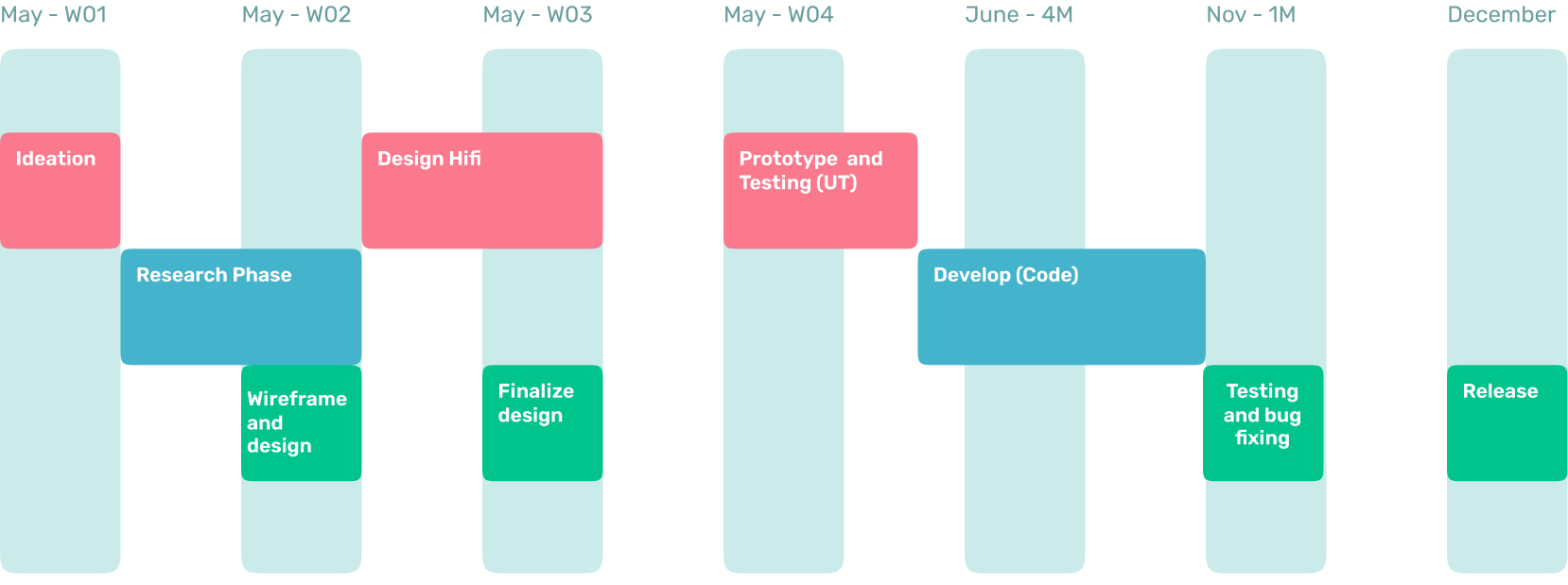
Our achievement in the journey depicted in numbers
 Preparation
Design Flow
Ideate
Turn idea from concept and brainstorm to MVP
Design
Sketch out the product to align the user needs
Develop
Convert the designs into a live application
Deploy
Launching the application to the market
Our achievement in the journey depicted in numbers
PreparationDesign Flow
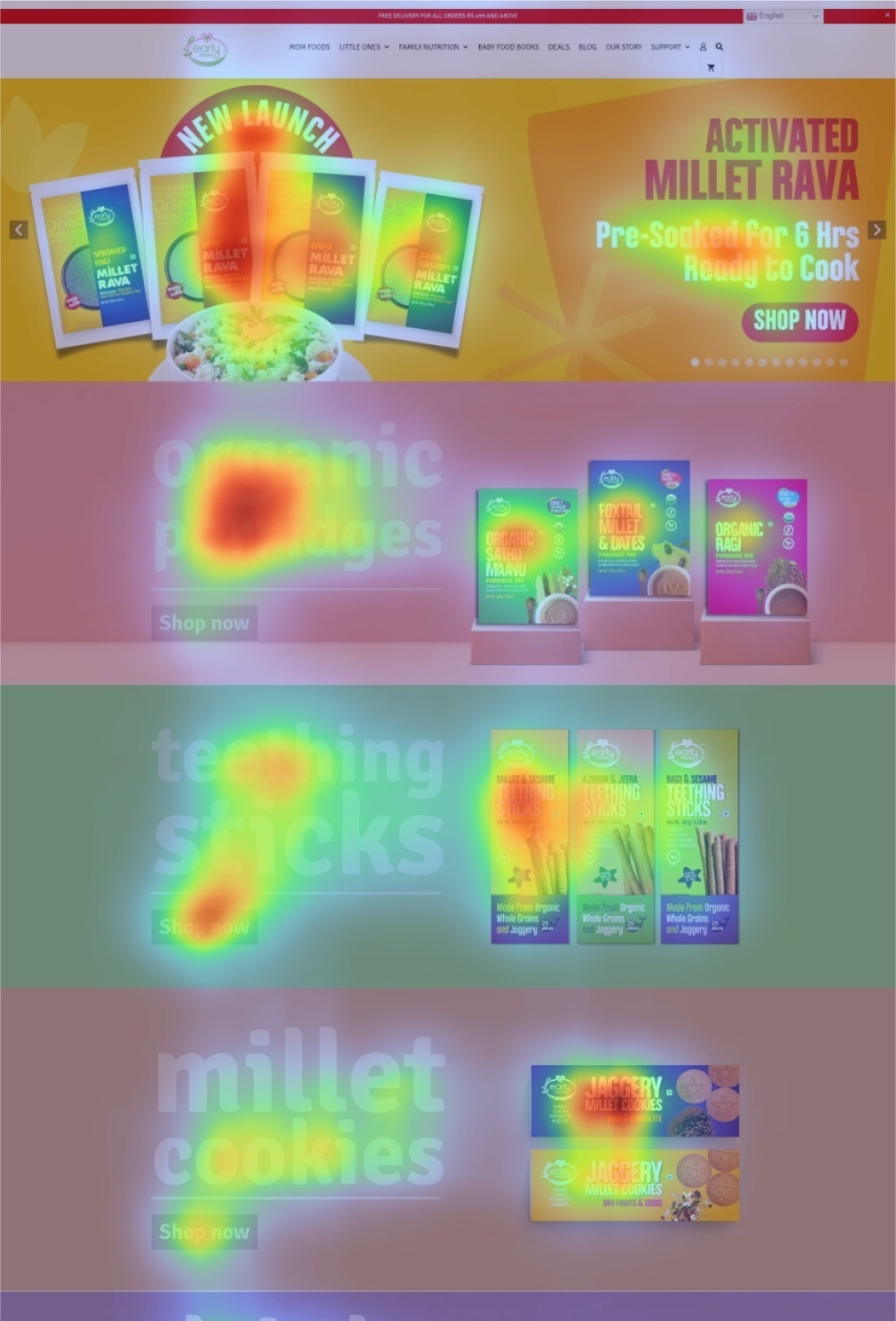
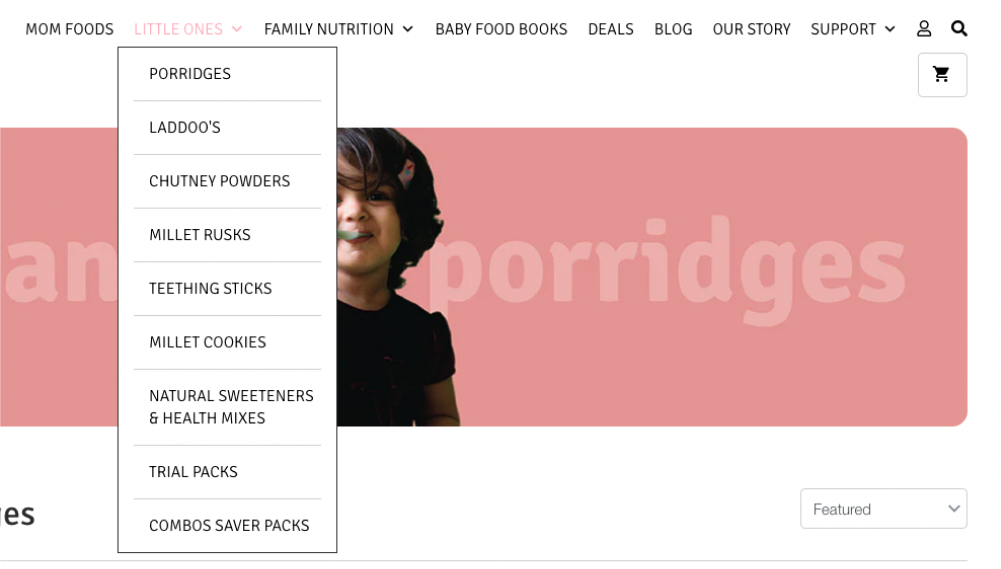
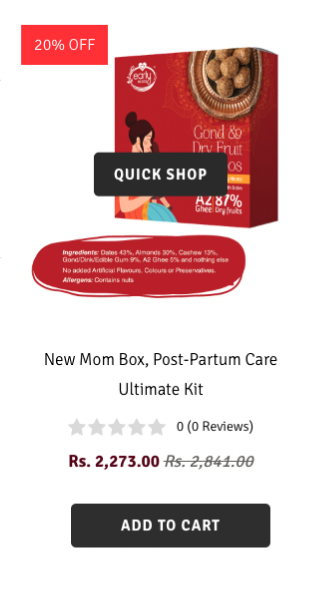
Menu needs to be perceived we can see almost no attention user has over the menu
Other images of product can come below
Color theme needs to be redefined
BG color in descriptions can be removed or changed
Search needs to be accessible without a click
Reviews can be hidden
CTAs on banner need to have better contrast and visibility
Alignment to cart icon
Indicator of changing the image
Next product can have a affordance
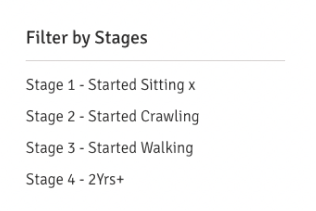
A checkbox will be a perfect cue for user to see and confirm the selected category
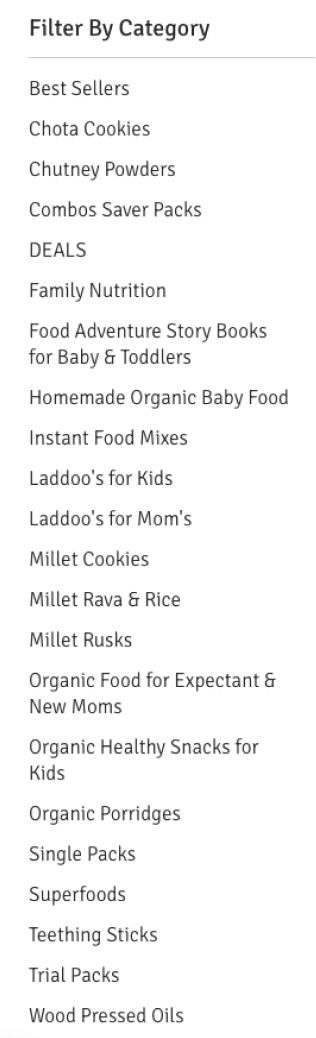
sometimes appear on not contextual to page’s data
Filters can be lot more dynamic and the list we see now should go under dropdown on top
Sorting can be brought in
Image per category will help user know what exactly they will find inside and also generate curiosity
Quick shop flow can be changed to View Product Details
Reviews can be hidden
Avoid Images with text
The action of “Quick shop” can be performed by “add to cart” button
Alignment of of the product on product grid
Menu needs to be perceived we can see almost no attention user has over the menu
Other images of product can come below
Color theme needs to be redefined
BG color in descriptions can be removed or changed
Search needs to be accessible without a click
Reviews can be hidden
CTAs on banner need to have better contrast and visibility
Alignment to cart icon
Indicator of changing the image
Next product can have a affordance
A checkbox will be a perfect cue for user to see and confirm the selected category
sometimes appear on not contextual to page’s data
Filters can be lot more dynamic and the list we see now should go under dropdown on top
Sorting can be brought in
Image per category will help user know what exactly they will find inside and also generate curiosity
Quick shop flow can be changed to View Product Details
Reviews can be hidden
Avoid Images with text
The action of “Quick shop” can be performed by “add to cart” button
Alignment of of the product on product grid
PreparationResearch Plan
User research is a process to find out the user point of view, their frustrations and their struggle to get their understanding. I have two used methods which contributed hugely in addition to my own findings
I did survey with 394 potential users in combination with interviews from individual conversation to know their views, experience and to collect quantitive and qualitative data. the target audience were between the age 21-50 Years old
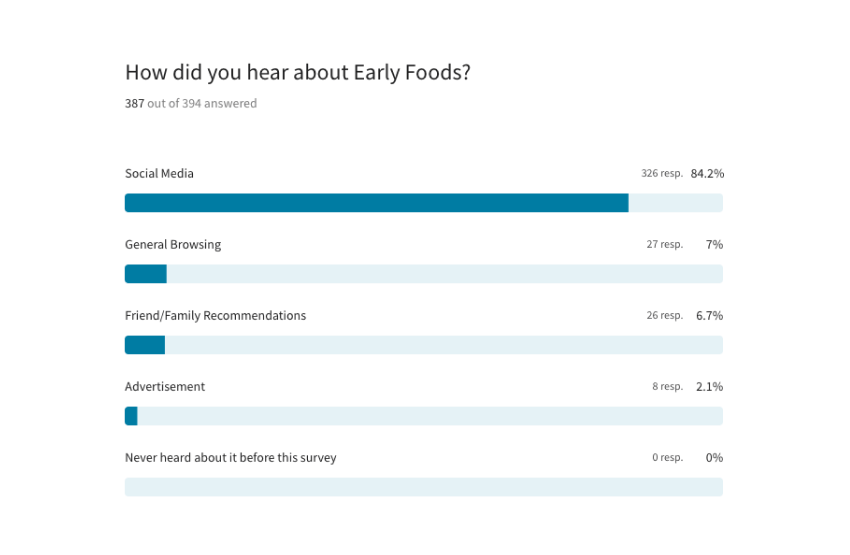
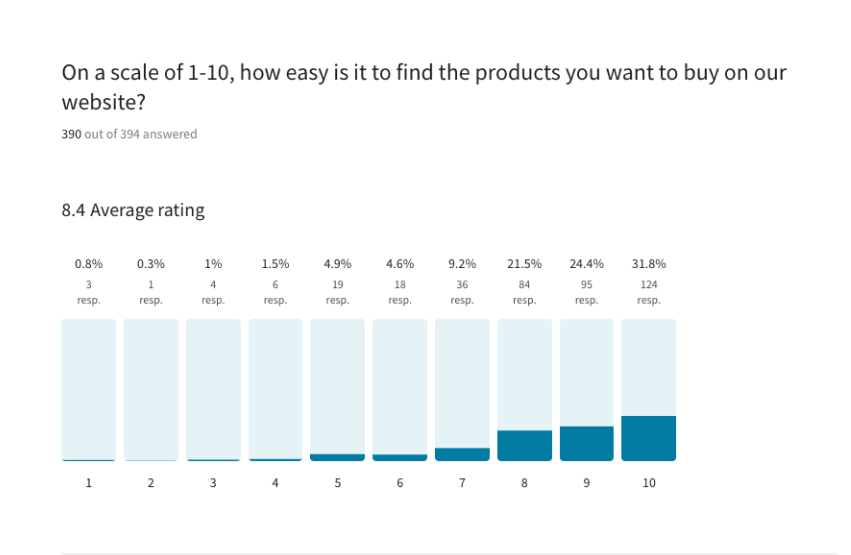
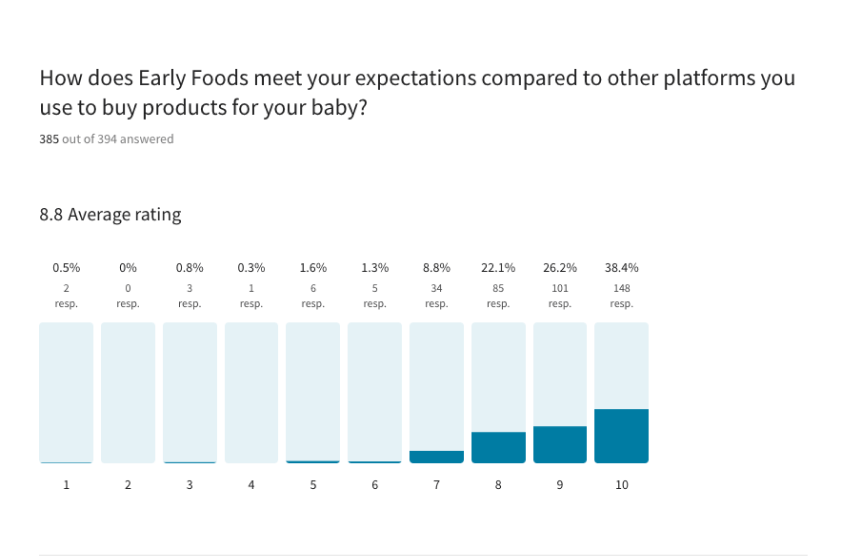
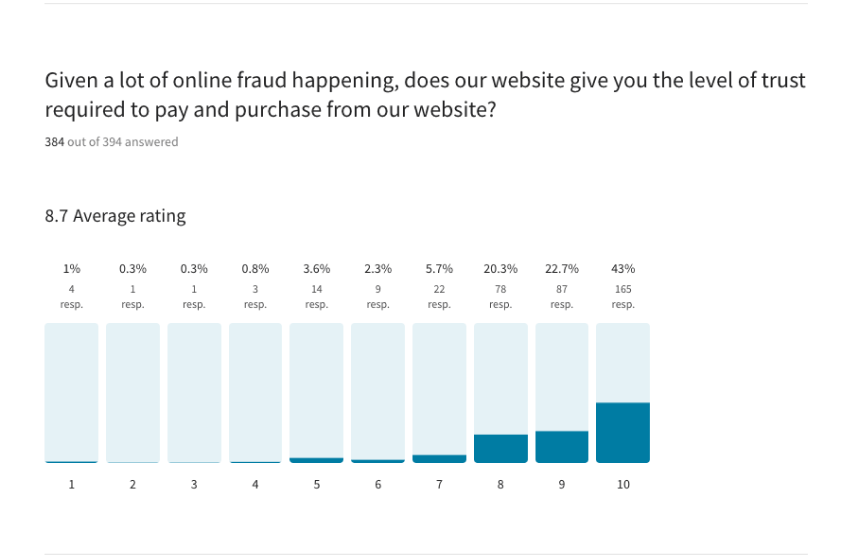
From the survey that I have done, I did filtering, and got 2 people for direct interview. I did online interviews using Zoom and invited them at different times.

Mother
Can you please make the app for the phone . iPhone or android and make it user friendly and easy to purchase. No COD | Technical Difficulty
Teacher
Couldn’t find the Laddoos category easily, but rest all was good | Can’t find products.. example Rusks.. I have to search
Nutritionist
Product description or the way shown is not much user friendly
Home Maker
No difficulty, sometimes if I search for an ingredient, not everything will show in the results
Doctor
No information about product was given and no tracking id or any information is provided
Food Seller
I cant able to find right products to my baby i didn’t understood what to order of its month wise seperated its its easy to find
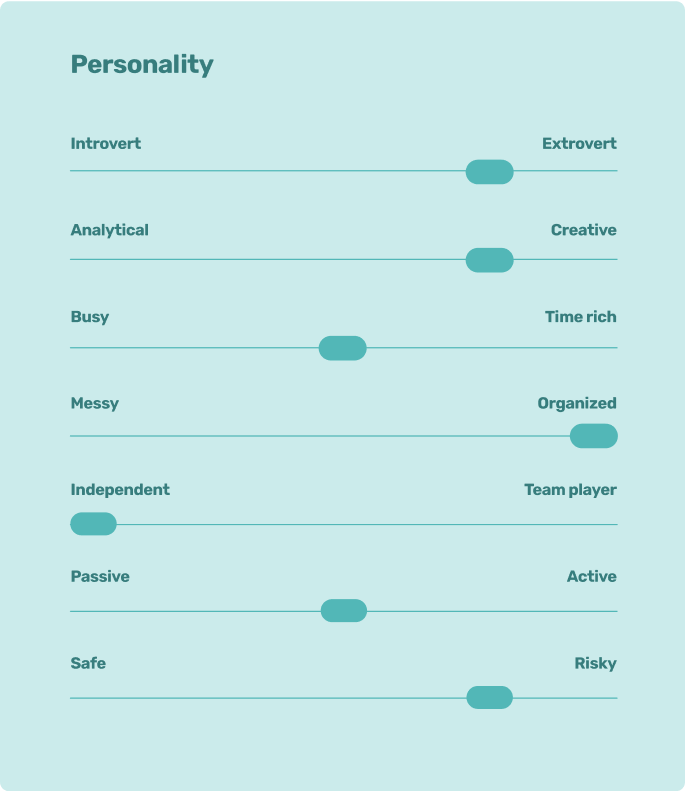
t embodies the characteristics, goals, motivations, and behaviors of real users, serving as a
reference point for design and decision-making processes in UX/UI development

Hi I am Rachana. I am from Neemuch but I live in Bangalore. My family was neither too open but mother has been always supportive and because of her I have achieved a lot of things in my life. I have done graduation and a diploma in hospitality. I have learned a lot from my career as I used to keep changing my jobs. I started my own business as well in Gurgaon. My business was my achievement I was so proud of and now being a mother is my another achievement as I love this phase of my life. I have a small and beautiful family of a baby boy, my dog, and my husband. I love doing DIY projects, painting, and traveling. Thanks
t embodies the characteristics, goals, motivations, and behaviors of real users, serving as a
reference point for design and decision-making processes in UX/UI development
Hi I am Rachana. I am from Neemuch but I live in Bangalore. My family was neither too open but mother has been always supportive and because of her I have achieved a lot of things in my life. I have done graduation and a diploma in hospitality. I have learned a lot from my career as I used to keep changing my jobs. I started my own business as well in Gurgaon. My business was my achievement I was so proud of and now being a mother is my another achievement as I love this phase of my life. I have a small and beautiful family of a baby boy, my dog, and my husband. I love doing DIY projects, painting, and traveling. Thanks
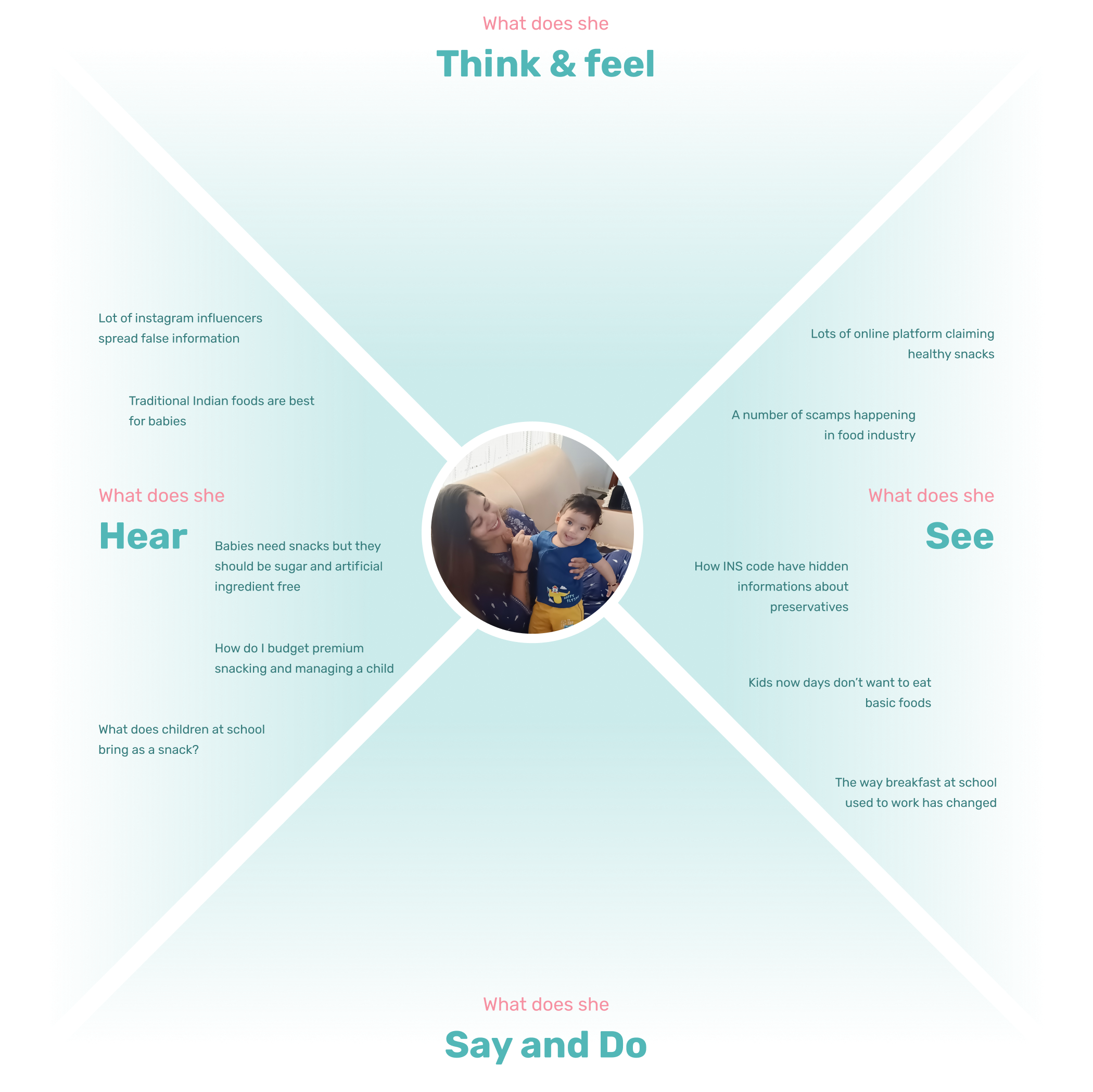
An empathy map is a collaborative visualization used to articulate what we know about a particular
type of user. It helps to synthesize research data to bit assist to understand how people make
decisions.

An empathy map is a collaborative visualization used to articulate what we know about a particular
type of user. It helps to synthesize research data to bit assist to understand how people make
decisions.
PreparationResearch Plan
 Preparation
Research Plan
PreparationResearch Plan
This research uses the Stimulus-Organism-Response (S-O-R) paradigm to understand online consumer behaviour, particularly in the context of baby foods e-Stores, with the intention to explore the effect of perceived value as a mediator.
Stimulus in this context is the Baby Food E-Store image for ages 0-3. The research uses four dimensions of the image: e-store design, order fulfilment, communication services, and security and confidentiality. These parameters are chosen to reflect consumers’ perception of the online store’s functionality.
The organism in this context is the Perceived Value, seen as a comparison of the benefits received versus the cost paid during the buying process. This extends beyond simply the income-cost comparison, it also incorporates consumers’ expectations and feelings towards a specific product or service. The research adopts Hallem and Barth’s division of consumers’ perceived value into emotional and functional values.
Response refers to consumers’ purchase intention, which will be measured against the baby food e-store image and the perceived value derived from it. The S-O-R model aims to provide insights into what features can genuinely capture consumers’ intentions, satisfy their needs, and increase their online consumer behaviours, particularly in the continuously evolving online market.
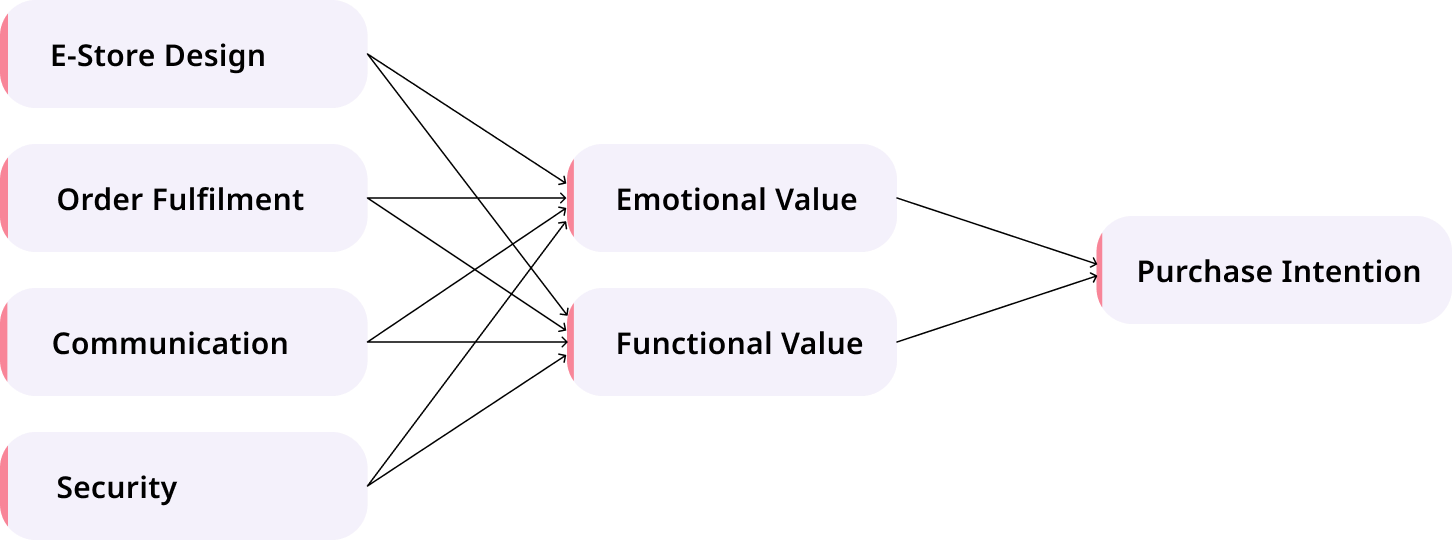
This research focuses on the impact of different aspects of e-commerce platforms on the perceived value of the customer and their subsequent purchase intention. The research hypotheses can be summarized as follows:
The design of an online shop, including elements like page layout, art design, search functions, and convenience, significantly affects the customers’ perceived emotional and functional value. Poorly designed stores can lead to customer rejection.
The consistency of an e-commerce platform in fulfilling its promises to customers impacts the perceived functional and emotional value. Inconsistency can lead to a decrease in perceived value and consumer trust.
The quality of the customer service, including timely and professional responses, affects the perceived emotional and functional value. Frequent communication and exchanges between buyers and sellers can increase trust and, therefore, perceived value.
The image of security and confidentiality is crucial for easy and safe online shopping. Concerns about personal data leaks, unsafe payment methods, and unclear commitments can impact the perceived emotional and functional value.
A positive perceived value, both emotional and functional, can significantly drive consumers’ purchasing behavior. Higher perceived benefits compared to costs result in stronger purchase intention.
The image of the online store can impact consumers’ perceived value, which in turn influences their purchase intentions. Both emotional and functional value play a mediating role between the online store image and consumers’ purchase intention.
In the context of a baby food online store, these hypotheses suggest that factors like design, order fulfillment, communication service, and security strongly influence the customer’s overall experience and their decision to make a purchase.
PreparationResearch Plan
This research uses the Stimulus-Organism-Response (S-O-R) paradigm to understand online consumer behaviour, particularly in the context of baby foods e-Stores, with the intention to explore the effect of perceived value as a mediator.
Stimulus in this context is the Baby Food E-Store image for ages 0-3. The research uses four dimensions of the image: e-store design, order fulfilment, communication services, and security and confidentiality. These parameters are chosen to reflect consumers’ perception of the online store’s functionality.
The organism in this context is the Perceived Value, seen as a comparison of the benefits received versus the cost paid during the buying process. This extends beyond simply the income-cost comparison, it also incorporates consumers’ expectations and feelings towards a specific product or service. The research adopts Hallem and Barth’s division of consumers’ perceived value into emotional and functional values.
Response refers to consumers’ purchase intention, which will be measured against the baby food e-store image and the perceived value derived from it. The S-O-R model aims to provide insights into what features can genuinely capture consumers’ intentions, satisfy their needs, and increase their online consumer behaviours, particularly in the continuously evolving online market.
This research focuses on the impact of different aspects of e-commerce platforms on the perceived value of the customer and their subsequent purchase intention. The research hypotheses can be summarized as follows:
The design of an online shop, including elements like page layout, art design, search functions, and convenience, significantly affects the customers’ perceived emotional and functional value. Poorly designed stores can lead to customer rejection.
The consistency of an e-commerce platform in fulfilling its promises to customers impacts the perceived functional and emotional value. Inconsistency can lead to a decrease in perceived value and consumer trust.
The quality of the customer service, including timely and professional responses, affects the perceived emotional and functional value. Frequent communication and exchanges between buyers and sellers can increase trust and, therefore, perceived value.
The image of security and confidentiality is crucial for easy and safe online shopping. Concerns about personal data leaks, unsafe payment methods, and unclear commitments can impact the perceived emotional and functional value.
A positive perceived value, both emotional and functional, can significantly drive consumers’ purchasing behavior. Higher perceived benefits compared to costs result in stronger purchase intention.
The image of the online store can impact consumers’ perceived value, which in turn influences their purchase intentions. Both emotional and functional value play a mediating role between the online store image and consumers’ purchase intention.
In the context of a baby food online store, these hypotheses suggest that factors like design, order fulfillment, communication service, and security strongly influence the customer’s overall experience and their decision to make a purchase.
To evaluate the features, usability, and user experience of competitors’ products or services. This analysis helps identify
strengths, weaknesses, opportunities, and threats in the market, enabling designers and companies to uncover gaps,
differentiate their offerings, and enhance user satisfaction.
Manna Foods is offering healthy, organic, and GMO-free baby food products.
The advantages include its continued focus on producing natural, organic products as well as its established reputation in the industry.
The disadvantage includes the relatively high cost of its products.
My Toddler, the unique value proposition is providing affordable and convenient baby food and meal options.
The advantages include its competitive pricing and easy-to-access platform, as well as its selection of healthy food items.
The disadvantage includes its limited range of product offerings.

Tots and Moms, the unique value proposition is highlighting health and nutrition in its product offerings.
The advantages include its focus on healthy and natural ingredients, as well as its commitment to customer satisfaction.
The disadvantage includes its lack of a direct to consumer e-commerce platform.
The unique value proposition is providing a personalized shopping cart based on a customer’s individual needs.
The advantages include its personalized shopping experience and its range of organic, whole food options.
The disadvantage includes the high price of its products.


Slurp Farm offers organic, preservative-free, and healthy food products for children, focusing on the provision of essential nutrients.
Transparent Branding: Their focus on transparency about their ingredients builds trust with customers.
Perception of Taste: While Slurp Farm works hard to make their products tasty, some children (or their parents) may prefer the taste of less healthy, but more traditionally flavorful options.
To evaluate the features, usability, and user experience of competitors’ products or services. This analysis helps identify
strengths, weaknesses, opportunities, and threats in the market, enabling designers and companies to uncover gaps,
differentiate their offerings, and enhance user satisfaction.
Manna Foods is offering healthy, organic, and GMO-free baby food products.
The advantages include its continued focus on producing natural, organic products as well as its established reputation in the industry.
The disadvantage includes the relatively high cost of its products.
My Toddler, the unique value proposition is providing affordable and convenient baby food and meal options.
The advantages include its competitive pricing and easy-to-access platform, as well as its selection of healthy food items.
The disadvantage includes its limited range of product offerings.
Tots and Moms, the unique value proposition is highlighting health and nutrition in its product offerings.
The advantages include its focus on healthy and natural ingredients, as well as its commitment to customer satisfaction.
The disadvantage includes its lack of a direct to consumer e-commerce platform.
The unique value proposition is providing a personalized shopping cart based on a customer’s individual needs.
The advantages include its personalized shopping experience and its range of organic, whole food options.
The disadvantage includes the high price of its products.
Slurp Farm offers organic, preservative-free, and healthy food products for children, focusing on the provision of essential nutrients.
Transparent Branding: Their focus on transparency about their ingredients builds trust with customers.
Perception of Taste: While Slurp Farm works hard to make their products tasty, some children (or their parents) may prefer the taste of less healthy, but more traditionally flavorful options.
Market research involves gathering, analyzing, and interpreting information about a market,
including a product’s or service’s nature, characteristics, and potential customer base.
76% of parents said they would be interested in purchasing pre-prepared, ready-to-eat food items for their children, particularly if the food items are organic or GMO-free.
92% of new mothers said they are interested in price discounts on website purchases
75% of parents said they are interested in buying organic baby food products online
72% of new mothers said they are interested in convenient, pre-prepared meals
87% said they would be more likely to buy a product if it has been endorsed by a trusted source
8% saying they would be very interested in purchasing packaged ready-to-eat meals.
87% said they would be more likely to buy a product if it has been endorsed by a trusted source.
18% saying they would be very interested in purchasing packaged ready-to-eat meals.
72% of new mothers said they are interested in convenient, pre-prepared meals
92% of new mothers said they are interested in price discounts on website purchases
Parents conduct research prior to purchasing baby care products, with the majority of the research being online.
A significant percentage of parents purchase baby food, and the majority of the baby food purchases are for convenience.
Organic and specialty baby foods have a lower market share, but are more likely to be purchased by those in higher socio-economic levels.
Consumers prefer an e-store with more information, modern design, and fewer distractions.
Convenience is the primary factor for purchasing baby food online, followed by price and product reviews.
Product information and design of the e-store are key factors in driving purchase intention.
These findings indicate that there is a strong market for organic and healthier pre-prepared and ready-to-eat meals and snacks among parents and new mothers. It is likely that such a product would be successful in the market if it is linked to trusted sources, offers convenience and reduces stress (such as reductions in cost), and offers
Market research involves gathering, analyzing, and interpreting information about a market,
including a product’s or service’s nature, characteristics, and potential customer base.
76% of parents said they would be interested in purchasing pre-prepared, ready-to-eat food items for their children, particularly if the food items are organic or GMO-free.
92% of new mothers said they are interested in price discounts on website purchases
75% of parents said they are interested in buying organic baby food products online
72% of new mothers said they are interested in convenient, pre-prepared meals
87% said they would be more likely to buy a product if it has been endorsed by a trusted source
8% saying they would be very interested in purchasing packaged ready-to-eat meals.
87% said they would be more likely to buy a product if it has been endorsed by a trusted source.
18% saying they would be very interested in purchasing packaged ready-to-eat meals.
72% of new mothers said they are interested in convenient, pre-prepared meals
92% of new mothers said they are interested in price discounts on website purchases
Parents conduct research prior to purchasing baby care products, with the majority of the research being online.
A significant percentage of parents purchase baby food, and the majority of the baby food purchases are for convenience.
Organic and specialty baby foods have a lower market share, but are more likely to be purchased by those in higher socio-economic levels.
Consumers prefer an e-store with more information, modern design, and fewer distractions.
Convenience is the primary factor for purchasing baby food online, followed by price and product reviews.
Product information and design of the e-store are key factors in driving purchase intention.
These findings indicate that there is a strong market for organic and healthier pre-prepared and ready-to-eat meals and snacks among parents and new mothers. It is likely that such a product would be successful in the market if it is linked to trusted sources, offers convenience and reduces stress (such as reductions in cost), and offers
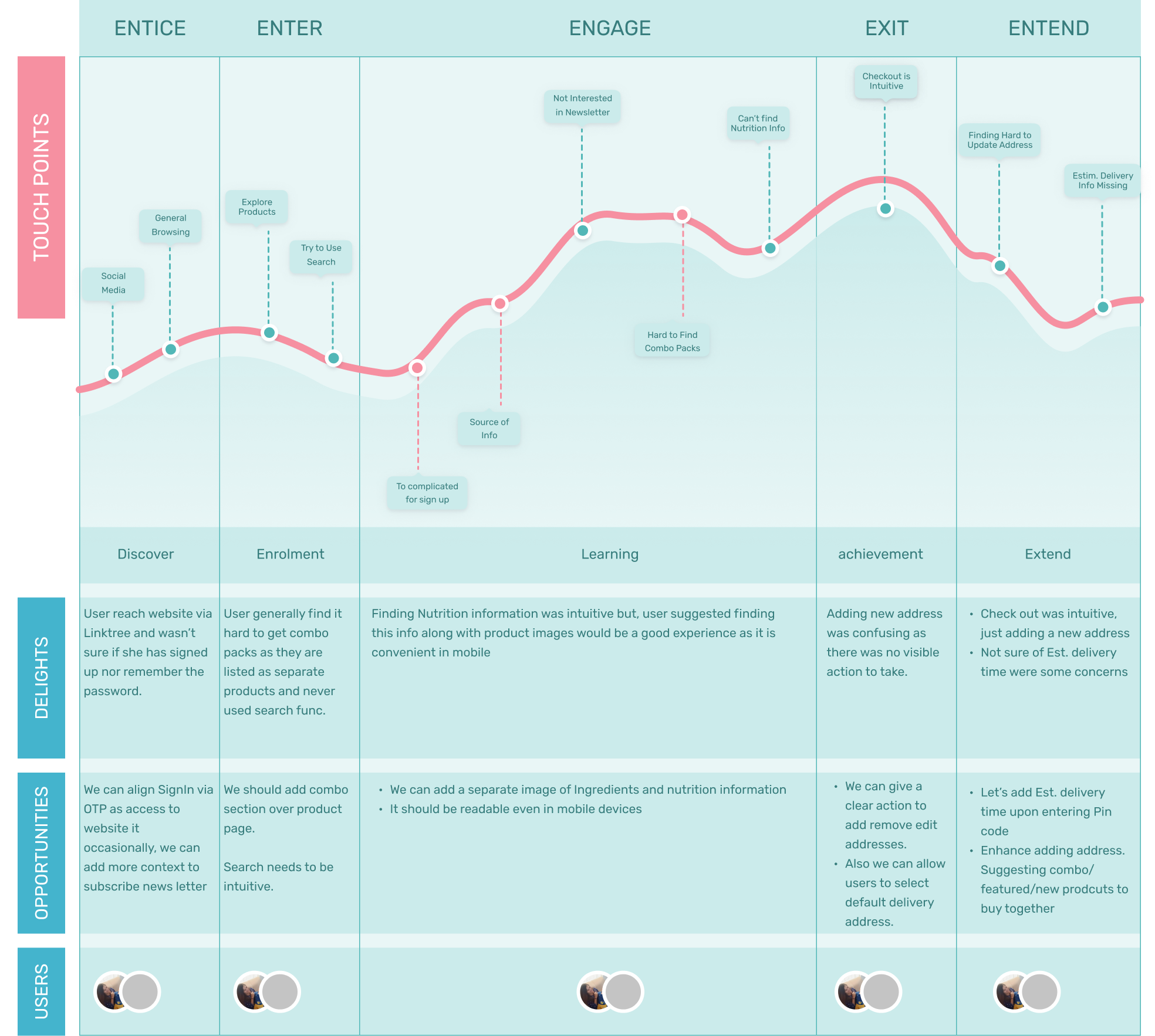
After the extensive research, surveys, and interviews I was able to find out these problems in the
current user experience and visual elements, below mentioned are only the high priority problems.
Certain filters on the webpage seem uncontextual and could potentially confuse users. It’s important to align the filters with the content on each page, offering more relevant and accurate filter options to streamline product search.
Certain products have inappropriate content under the “Nutrition Info” title, which might be misleading for users. The misplaced “How we are different” content needs to be correctly positioned to maintain accurate product information integrity.
The images displaying the ingredients of products could be enlarged to provide users with a clearer, more detailed view, facilitating more informed product choices.
Current footer titles like “Footer Menu” and “Information” are vague and could be more descriptive. Renaming them to “Help and Support” and “Contact Us” respectively would make the website more user-friendly by offering clearer navigation cues.
The testimonial section seems a bit confusing to users, with its current layout and presentation. Shifting the heading to the left and framing kids’ photos with a relevant title such as “You are awesome” can enhance readability and engagement.
The product page could be more informative by including Frequently Asked Questions (FAQs) specific to each product, in addition to reviews and questions. This would help address common queries and doubts users may have.
The landing page could benefit from visual breaks or separators to distinguish different sections, particularly where the Unique Selling Points (USPs) are described. This would enhance the readability and visual flow of the page.
Renaming the “Blogs” section to “Food for Health and Recipe Journals” can provide users with a better understanding of the content they’ll find in that section, increasing their engagement.
The website currently lacks user reviews, which are crucial for building trust and credibility. While accumulating real user reviews, temporary placeholders can be used, reflecting common feedback heard from users.
Clear labelling and information about sugar-free products can significantly improve the shopping experience for health-conscious users or those managing specific dietary requirements. It’s important to ensure this information is easily accessible and accurate.
Providing details about a product’s hardness or softness can be particularly useful, especially for products intended for infants or toddlers who are teething. Accurate texture descriptions can assist users in selecting the most suitable products for their needs.
Clear information about the suitable age group for each product can guide users in making appropriate product choices. This is crucial in ensuring the products meet the nutritional and developmental needs of specific age groups.
After the extensive research, surveys, and interviews I was able to find out these problems in the
current user experience and visual elements, below mentioned are only the high priority problems.
Certain filters on the webpage seem uncontextual and could potentially confuse users. It’s important to align the filters with the content on each page, offering more relevant and accurate filter options to streamline product search.
Certain products have inappropriate content under the “Nutrition Info” title, which might be misleading for users. The misplaced “How we are different” content needs to be correctly positioned to maintain accurate product information integrity.
The images displaying the ingredients of products could be enlarged to provide users with a clearer, more detailed view, facilitating more informed product choices.
Current footer titles like “Footer Menu” and “Information” are vague and could be more descriptive. Renaming them to “Help and Support” and “Contact Us” respectively would make the website more user-friendly by offering clearer navigation cues.
The testimonial section seems a bit confusing to users, with its current layout and presentation. Shifting the heading to the left and framing kids’ photos with a relevant title such as “You are awesome” can enhance readability and engagement.
The product page could be more informative by including Frequently Asked Questions (FAQs) specific to each product, in addition to reviews and questions. This would help address common queries and doubts users may have.
The landing page could benefit from visual breaks or separators to distinguish different sections, particularly where the Unique Selling Points (USPs) are described. This would enhance the readability and visual flow of the page.
Renaming the “Blogs” section to “Food for Health and Recipe Journals” can provide users with a better understanding of the content they’ll find in that section, increasing their engagement.
The website currently lacks user reviews, which are crucial for building trust and credibility. While accumulating real user reviews, temporary placeholders can be used, reflecting common feedback heard from users.
Clear labelling and information about sugar-free products can significantly improve the shopping experience for health-conscious users or those managing specific dietary requirements. It’s important to ensure this information is easily accessible and accurate.
Providing details about a product’s hardness or softness can be particularly useful, especially for products intended for infants or toddlers who are teething. Accurate texture descriptions can assist users in selecting the most suitable products for their needs.
Clear information about the suitable age group for each product can guide users in making appropriate product choices. This is crucial in ensuring the products meet the nutritional and developmental needs of specific age groups.
Based on the problems we found out below are the solutions that we proposed client in order to
enhance the overall User experience and enhance the joy of shopping from the Early Foods.



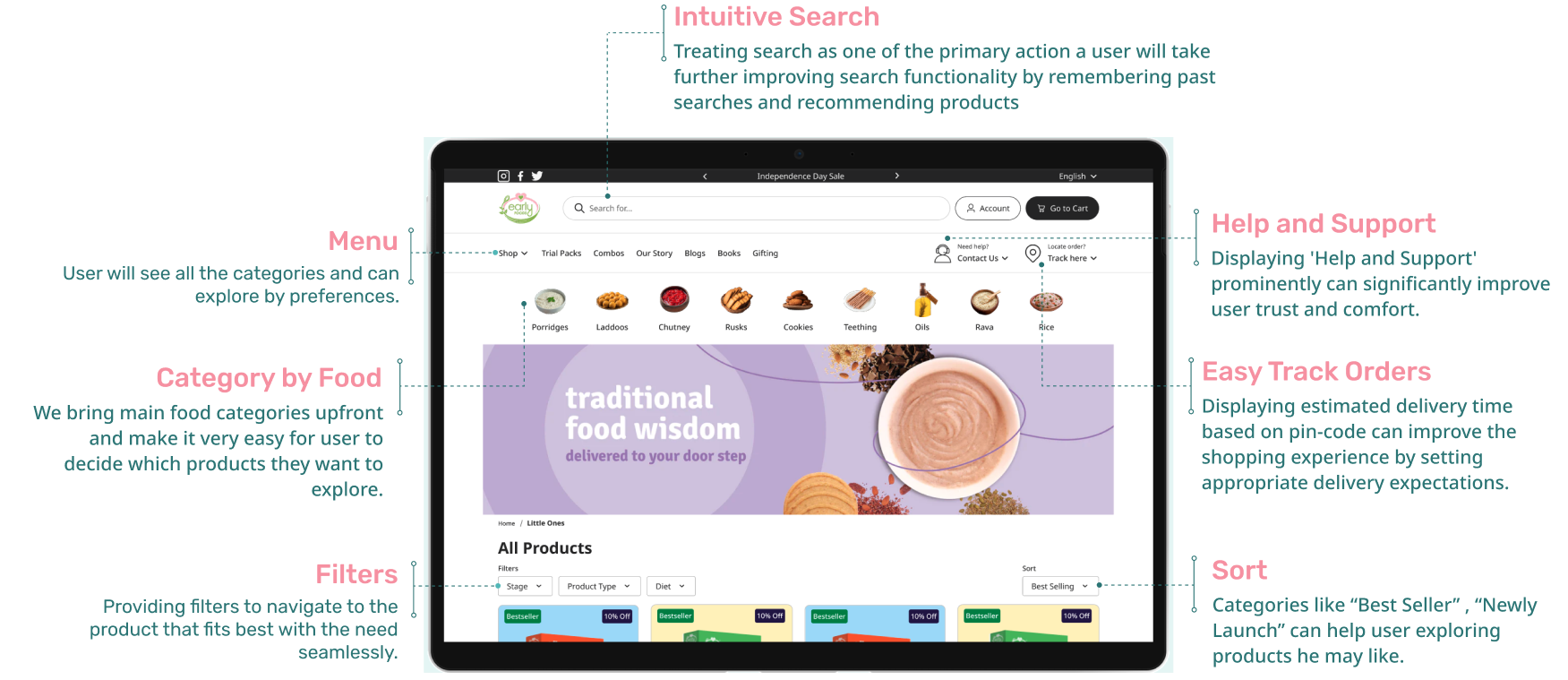
Displaying ‘Help and Support’ prominently can significantly improve user trust and comfort. It assures users that assistance is readily available, should they encounter any issues or queries.
Proactively seeking feedback on products can help improve the user experience. Nudges over email or messages, and including a review QR code with the delivery package, may encourage users to share their opinions.
Introducing a referral program with promotional codes can stimulate customer growth. It offers an incentive for existing users to share their positive experiences with others, thereby attracting new users.
Improving search functionality by remembering past searches and recommending products can streamline the shopping process. Users can quickly access their favorite items or explore recommended products based on their past preferences.
Allowing users to mark products as favourites or add them to a wish list could enhance user engagement. It also provides opportunities for reminders about discounts on wish-listed items.
Features like repeating past orders, showing recent searches, and recommending items based on search/buying history can provide a personalized shopping experience.
Streamlining the sign-up and sign-in process and introducing options like OTP sign-in can make the user’s journey smoother.
Offering a simple product purchase guide helps first-time visitors understand how to navigate the website effectively and efficiently.
Detailed product images can significantly influence purchase decisions. A sequence of images showcasing packaging, actual product, USPs, serving suggestions, and nutritional information
Highlighting USPs such as freshness guarantee, Ayurvedic backing, women empowerment, and brand endorsements can enhance brand perception and trust.
Showcasing frequently bought together products and providing filters like “Best Seller”, “Newly Launched”, and “Featured Products” can aid users in making their purchase decisions.
Banners emphasizing product information, use and benefits, benchmarks, and serving suggestions can make product pages more informative and engaging.
Displaying estimated delivery time based on pin-code can improve the shopping experience by setting appropriate delivery expectations.
A detailed user profile section including information about order history, user demographics, saved addresses, wish list, and support links can enhance user engagement and provide personalized experiences.
Introducing new, intuitive icons can reduce reading time and make the website more user-friendly.
Improving the UX writing on the website and graphics can make the user’s journey more straightforward and enjoyable.
Making the newsletter subscription process interactive and fun can boost user engagement and increase subscription rates.
Redesigning the navigation menu and overall website flow can enhance the overall website experience by making it more intuitive and user-friendly.
Based on the problems we found out below are the solutions that we proposed client in order to
enhance the overall User experience and enhance the joy of shopping from the Early Foods.
Displaying ‘Help and Support’ prominently can significantly improve user trust and comfort. It assures users that assistance is readily available, should they encounter any issues or queries.
Proactively seeking feedback on products can help improve the user experience. Nudges over email or messages, and including a review QR code with the delivery package, may encourage users to share their opinions.
Introducing a referral program with promotional codes can stimulate customer growth. It offers an incentive for existing users to share their positive experiences with others, thereby attracting new users.
Improving search functionality by remembering past searches and recommending products can streamline the shopping process. Users can quickly access their favorite items or explore recommended products based on their past preferences.
Allowing users to mark products as favourites or add them to a wish list could enhance user engagement. It also provides opportunities for reminders about discounts on wish-listed items.
Features like repeating past orders, showing recent searches, and recommending items based on search/buying history can provide a personalized shopping experience.
Streamlining the sign-up and sign-in process and introducing options like OTP sign-in can make the user’s journey smoother.
Offering a simple product purchase guide helps first-time visitors understand how to navigate the website effectively and efficiently.
Detailed product images can significantly influence purchase decisions. A sequence of images showcasing packaging, actual product, USPs, serving suggestions, and nutritional information
Highlighting USPs such as freshness guarantee, Ayurvedic backing, women empowerment, and brand endorsements can enhance brand perception and trust.
Showcasing frequently bought together products and providing filters like “Best Seller”, “Newly Launched”, and “Featured Products” can aid users in making their purchase decisions.
Banners emphasizing product information, use and benefits, benchmarks, and serving suggestions can make product pages more informative and engaging.
Displaying estimated delivery time based on pin-code can improve the shopping experience by setting appropriate delivery expectations.
A detailed user profile section including information about order history, user demographics, saved addresses, wish list, and support links can enhance user engagement and provide personalized experiences.
Introducing new, intuitive icons can reduce reading time and make the website more user-friendly.
Improving the UX writing on the website and graphics can make the user’s journey more straightforward and enjoyable.
Making the newsletter subscription process interactive and fun can boost user engagement and increase subscription rates.
Redesigning the navigation menu and overall website flow can enhance the overall website experience by making it more intuitive and user-friendly.
UI DesignPoint take away
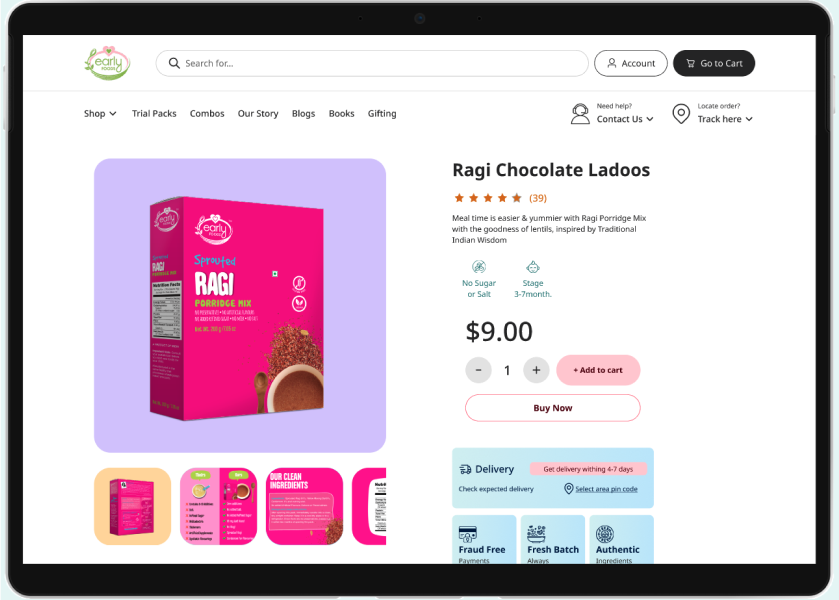
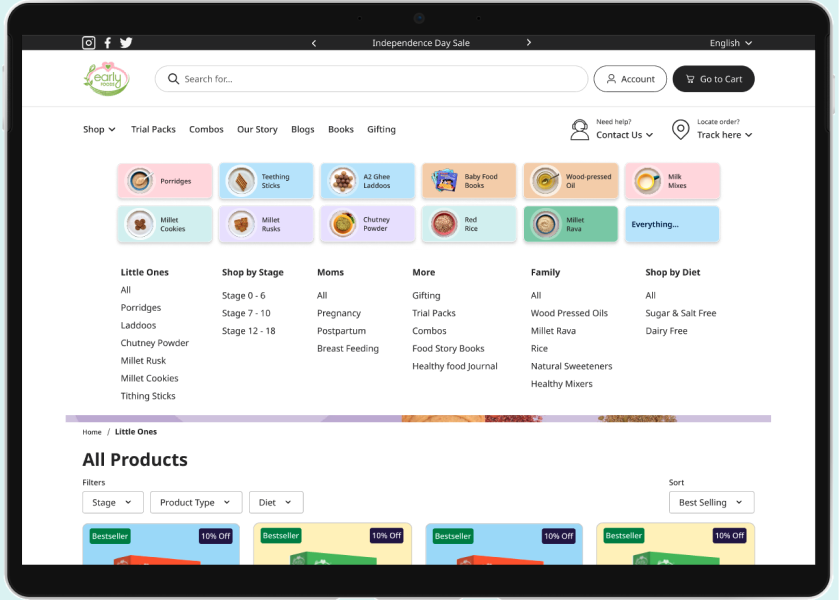
Before
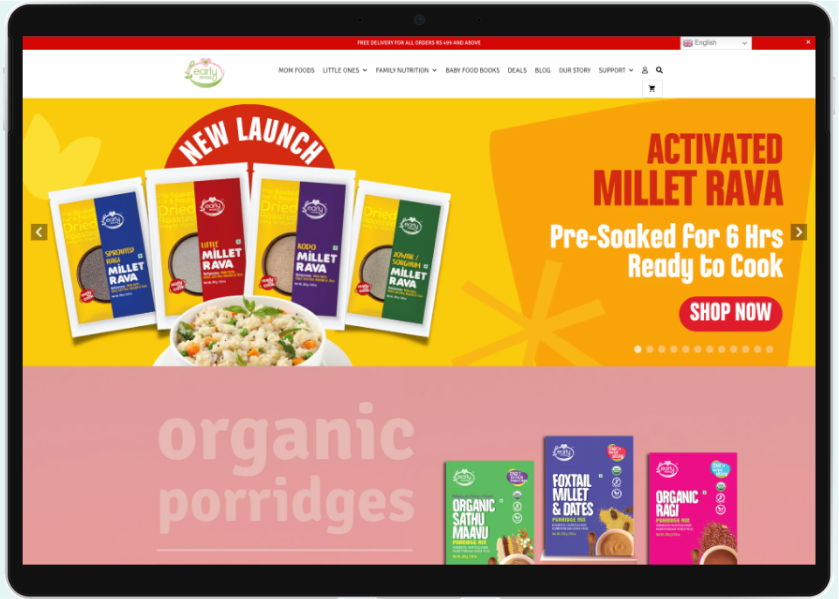
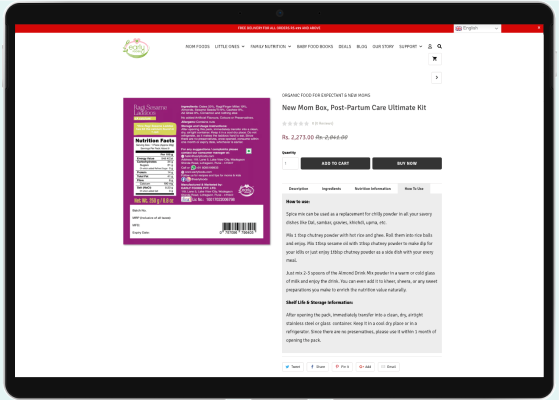 UI Design
Point take away
Before
UI DesignPoint take away
Primary – Main
Colors that represent EarlyFood brand, used as primary color.
Main 01 (EF Light Pink)
Main 02 (EF Sky Blue)
Main 03 (EF Green)
Primary – Supplementary
Colors that complement the use of primary colors.
Supplementary 01 (Lavender Blue)
Supplementary 02 (Yellow)
Supplementary 03 (Caramel)
UI DesignPoint take away
Primary – Main
Colors that represent EarlyFood brand, used as primary color.
Main 01 (EF Light Pink)
Main 02 (EF Sky Blue)
Main 03 (EF Green)
Primary – Supplementary
Colors that complement the use of primary colors.
Supplementary 01 (Lavender Blue)
Supplementary 02 (Yellow)
Supplementary 03 (Caramel)
TypographyPrimary Typeface
01 LOWER CASE | 02 REGULAR
a b c d e f g h i j
k l m n o p q r s
t u v w x y z
Primary Typeface
01 REGULAR | 02 SEMI BOLD | 03 BOLD
a b c d e f g h i j
k l m n o p q r s
t u v w x y z
TypographyPrimary Typeface
01 LOWER CASE | 02 REGULAR
a b c d e f g h i j k l m n o p q r s t u v w x y z
Primary Typeface
01 REGULAR | 02 SEMI BOLD | 03 BOLD
a b c d e f g h i j k l m n o p q r s t u v w x y z
ICONOGRAPHY
Transparancy

Secure

Fresh Food

Refined Flour

Added Sugar/Salt

Thickeners

Soda

Artificial Flour

Milk Powder

Preservatives

Bad Stuff

Almond

Jowar millet

Ragi millet

Bajra millet

Flax seeds

Sesame seeds

Curry leaves

Jaggery

Rice

Whole Wheat

Rava

Oil
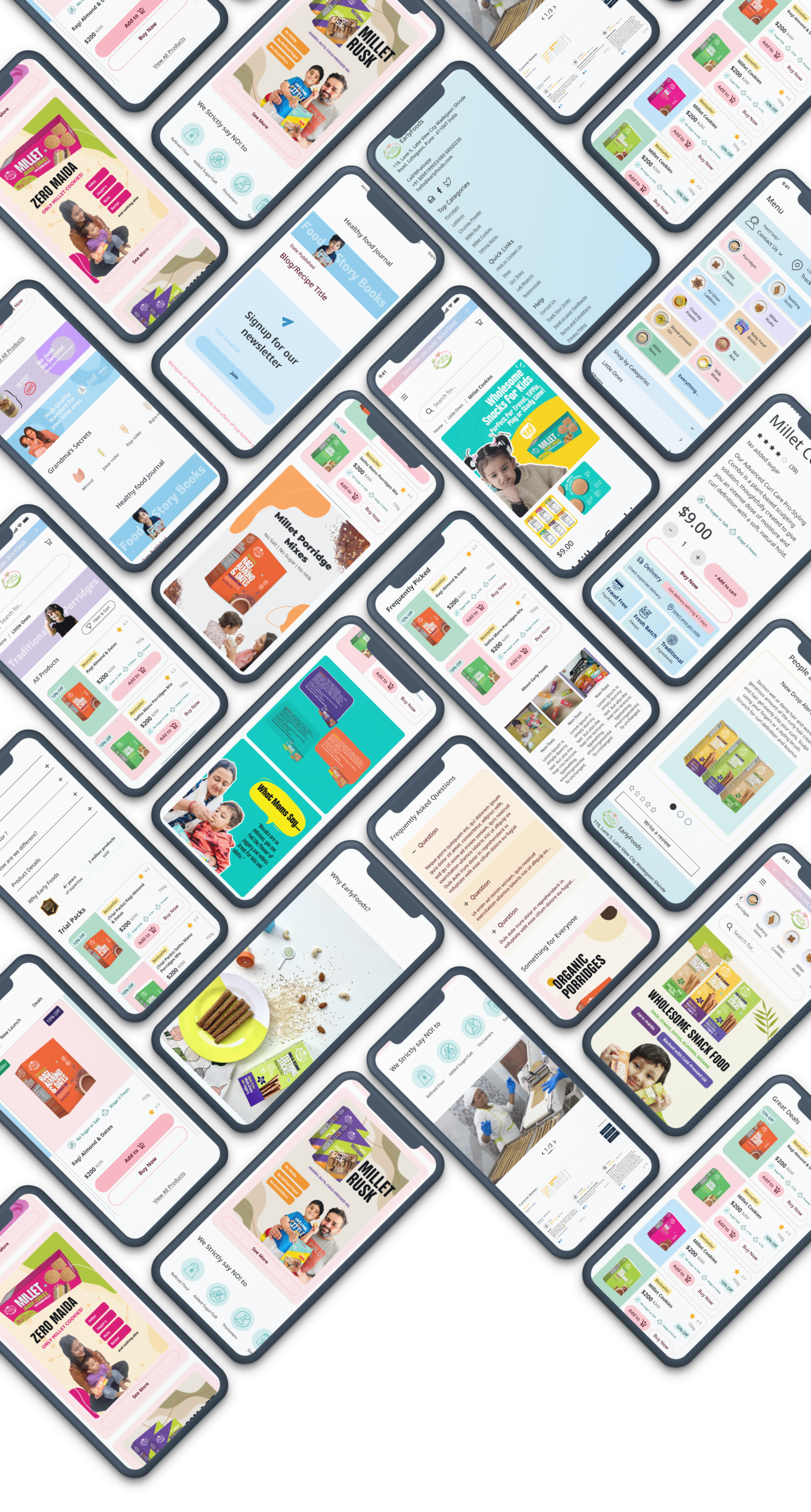
Every components layout structures, and color combinations are backed by strong human psychology of perceiving experiences quoted by sir Don Norman in the book – The design of everyday Things.
Every components layout structures, and color combinations are backed by strong human psychology of perceiving experiences quoted by sir Don Norman in the book – The design of everyday Things.